Header background left
Header background right
University Logo

M.Tech in Machine Design

Engineering Robust and Optimized Mechanical Systems

This course focuses on advanced stress analysis, fatigue and fracture mechanics, tribology, and the optimization of mechanical components and systems. Students utilize modern CAD and finite element analysis (FEA) tools to design durable, reliable, and high-performance machines across various industrial sectors.

Header Image
Mission Vision Mobile

EXPLORE THIS SECTION

Placement Records

Our M.Tech in Machine Design is designed to train engineers in advanced mechanical design, structural analysis and computational optimisation for complex industrial systems. Advancing expertise in FEA, tribology, failure analysis and simulation-driven design through research-driven coursework and industry collaborations, we build specialists in innovative systems across aerospace, automotive and energy domains.

90%

Thesis Completion Rate

86%

Advanced Certification Rate

2x

Industry-Sponsored Research Projects

3x

Industry Collaborations

Your Future, Unfolded

The different career paths available for the program

M.Tech in Machine Design
Career Image

Structural Analysis Engineer

Aerospace Structural Designer

Thermal Systems Design Engineer

Tribology & Lubrication Engineer

Failure Analysis Expert

R&D Engineer – Advanced Mechanisms

Product Design Engineer and many more

Certifications

Certification Image

SolidWorks Certified Professional (CSWP)

SolidWorks professional certification builds expert-level parametric modelling and simulation skills, equipping students to lead complex mechanical product design and validation workflows in industrial environments.

Certification Image

ANSYS – Advanced Structural & Fatigue Analysis Certification

ANSYS advanced certification builds expert skills in FEA-based structural, thermal and fatigue analysis, preparing students for senior simulation and design validation roles in aerospace and automotive industries.

Certification Image

CATIA V5/V6 – Advanced Surface & Assembly Design

Dassault Systèmes' advanced CATIA certification equips students with expert surface modelling and assembly design skills, preparing them for senior mechanical design roles in aerospace and automotive sectors.

Designed for Real-World Success

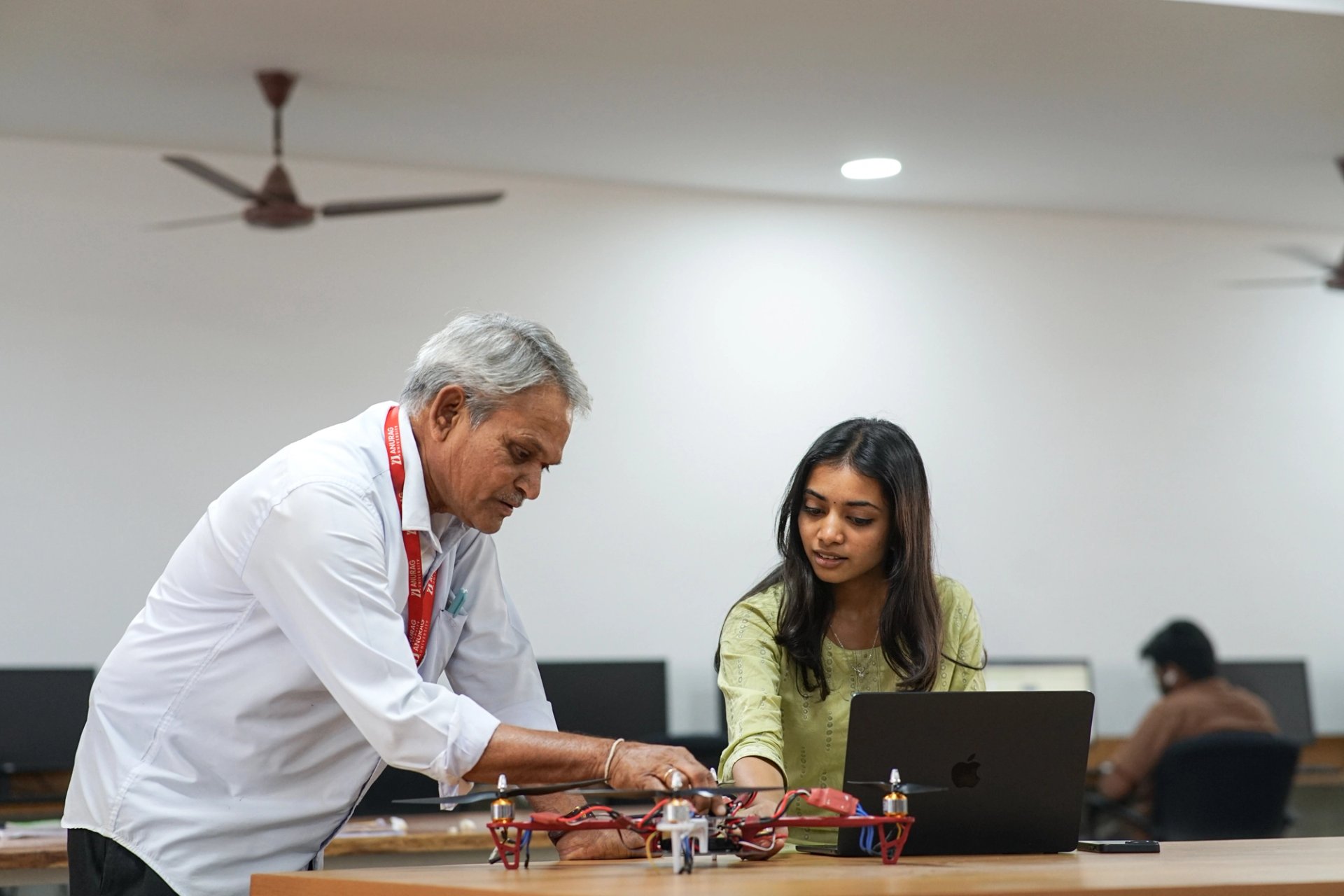
Our programs are built on an Outcome-Based Education (OBE) framework, ensuring that every concept connects to real-world application. With industry collaborations, and an active research culture, you gain hands-on experience alongside strong academic foundations.

Eligibility Criteria

Eligible Criteria Image

Academic Requirement

Candidates must have passed a 4-year Bachelor’s Degree in Engineering/Technology in the relevant branch from a recognized University.

Candidates must have secured a minimum of 50% aggregate marks in the qualifying undergraduate examination.

Entrance Test Requirement

Admission shall be based on merit through:

  • Graduate Aptitude Test in Engineering (GATE)

  • TS PGECET

  • Anurag Common Entrance Test (Anurag CET)

  • Qualifying Examination on merit

For Foreign / NRI category, admission shall be based on merit in GATE or marks secured in the qualifying examination.

Related Programs

Stay informed with our latest news and insights.

Programs

2 YEARS

PG PROGRAM

M.Tech in Digital Manufacturing

Learn how component design translates into automated production techniques.

Programs

2 YEARS

PG PROGRAM

M.Tech in Robotics and Automation

Focus on the mechanical linkages and structural dynamics of robotic systems.

Program

2 YEARS

PG PROGRAM

M.Tech in Construction Technology and Management

Acquire knowledge of advanced materials selection and failure analysis.

Future Pattern
Turning Degrees into Careers

Turning Degrees into Careers

large_white
Join Anurag University Today

Frequently Asked Questions

It focuses on advanced machine design, analysis, and mechanical systems.

Yes, students are trained in modern design and simulation tools.

Subjects include machine design, dynamics, and material analysis.

Yes, through design projects and lab work.

It combines theory, design, and application-based learning.

Become Team
Designed By
Team BecomeTeam Become

© 2026 Anurag University. All rights reserved.

Anurag University